
cara’s immunity boosting fire cider recipe
As the winter months approach, my mother would always look forward to brewing her homemade fire cider recipe and one of her love languages was gifting her friends and family ‘potent shit’ as she would put it. A fond memory is walking in on her in the kitchen stirring her massive brew with a wooden spoon, genuinely cackling to herself like a witch, because she was so excited to be brewing again.
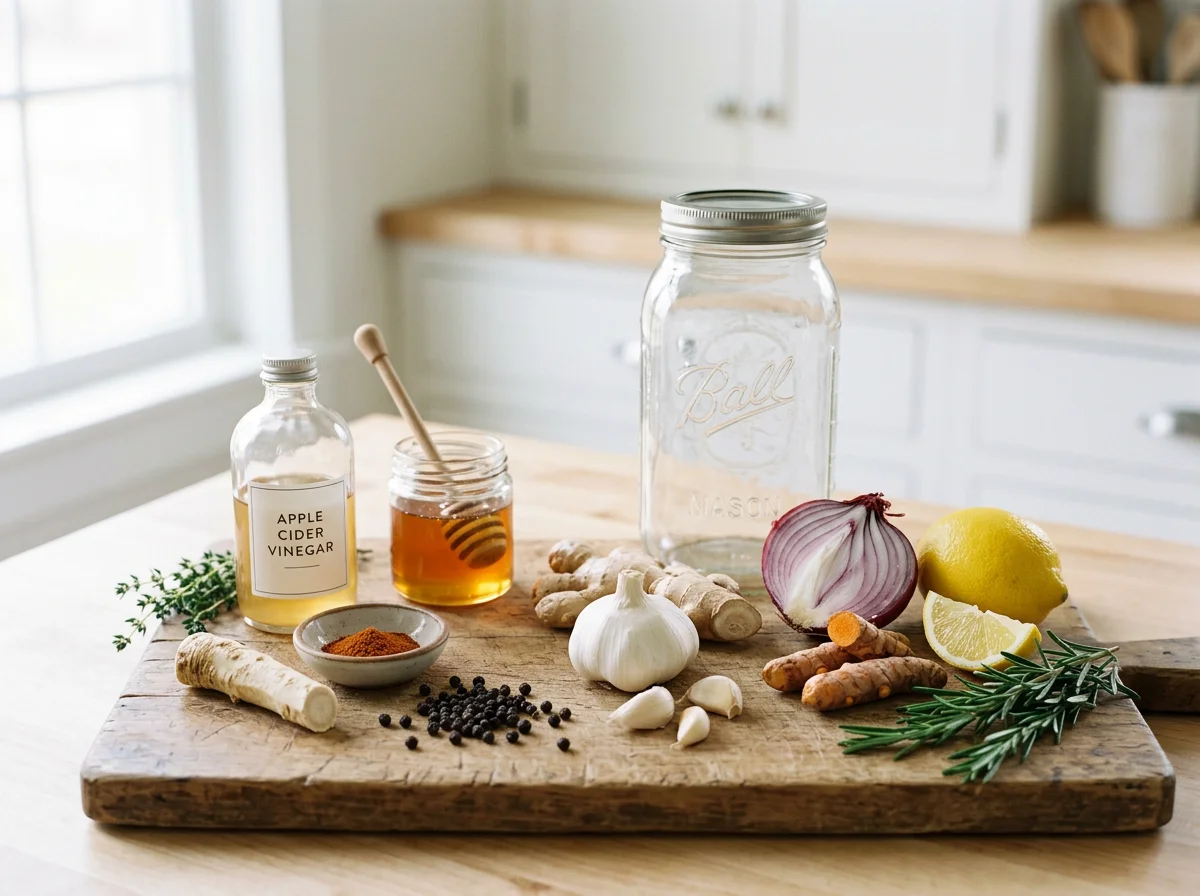
What is Fire Cider?
A potent cold infusion of herbs, roots and other goodies that is designed to be taken as an immunity and gut health shot daily. It’s acidic, bitter and designed to promote the healing and immune boosting cells within your body.
-
4 x Lemons - sliced rind on
4 x Oranges - sliced rind on
4 - 6 tablespoons Ginger - sliced
4 - 6 Tbsp. Turmeric Root - grated
1 - 2 heads of garlic - peeled and crushed
½ Medium Onion - Thick Slices
1 Tbsp. Cayenne Pepper Powder
2 Tsp. Black Pepper - Crushed
5 Tbsp. Fresh Horseradish - Grated
2 Sticks Cinnamon - Whole
3L Organic Raw Apple Cider Vinegar
1 4L Glass Jar with Lid - enough to hold everything or scale recipe accordingly
100gm - 200gm Raw Honey
-
Slice all ingredients into small pieces and place into your disinfected glass jar
Pour in the apple cider vinegar until it covers all ingredients, cover ensuring it is airtight. Do not add the honey yet.
Leave in a cool dark place to ferment for 6 weeks
Strain the liquid through a muslin cloth and stir in your honey thoroughly, until it reaches your desired sweetness.
Store in a clean glass bottle in the fridge.
Take 30ml -45ml once per day, being sure to shake the mixture before pouring.
TIPS:
This recipe is intuitive, you can add as much or little of each ingredient depending on what you have available and your taste preferences.
Here’s a list to spark your imagination:
Citrus - Lemon, Orange, Mandarin, Grapefruit or Lime
Spices - Jalapeno, Habanero
Herbs - Thyme, Lemon Balm, Oregano
Plants - Kawakawa, Manuka leaf, Mullein
-
Fire cider is traditionally thought of as a warming, stimulating herbal tonic, made from a combination of pungent roots, spices, citrus and other botanicals. Rather than being a single-purpose remedy, it brings together plants that have traditionally been used to support several different aspects of wellbeing — particularly digestion, circulation, respiratory comfort and the body's natural inflammatory response.
One of the most noticeable effects of fire cider is on the digestive system. Ginger, turmeric, garlic, onion, cayenne, black pepper and cinnamon have all been traditionally used around digestion, particularly for sluggish digestion, bloating and general digestive discomfort. The pungent nature of ingredients such as ginger, cayenne and horseradish also stimulates the senses and creates a warming sensation throughout the body. Taken before or alongside food, a small amount of fire cider can be a lively way to support the digestive process and awaken the appetite.
The blend is also traditionally associated with respiratory and sinus comfort. Horseradish, ginger, garlic, cayenne and cinnamon are all pungent botanicals that have a long history of use during the colder months. Their strong aromatic compounds create that characteristic warming, nose-clearing sensation that many people associate with traditional herbal remedies. Honey and citrus add a soothing and refreshing element, while honey itself has evidence supporting its use for relieving cough symptoms.
Another important feature of this combination is its abundance of plant compounds with antioxidant and anti-inflammatory activity. Turmeric's curcuminoids, ginger's gingerols and shogaols, garlic's sulfur compounds, citrus flavonoids, cinnamon's aromatic compounds and the polyphenols found throughout the plants have all been investigated for their effects on oxidative stress and inflammatory pathways. This doesn't mean fire cider should be thought of as an anti-inflammatory medicine, but it does help explain why so many of these plants have remained important in traditional herbal preparations.
The combination also provides a strong warming and invigorating effect. Cayenne, ginger, horseradish and black pepper stimulate the senses and create heat, while the aromatic spices and citrus make the tonic bright and energising rather than simply hot. Traditionally, preparations containing these kinds of pungent ingredients were particularly valued during winter and periods of cold weather, when warming the body and supporting digestion were considered important to maintaining wellbeing.
Fire cider isn't intended to be a cure-all, and we don't believe one tonic needs to promise that. Its appeal is much simpler: a traditional preparation made from plants that have been used for generations to support digestion, warm the body, comfort the respiratory system and provide a concentrated dose of botanical goodness.